
#10 · TILING & KITCHEN SPLASHBACKS
Splashback replacement and kitchen floor tiling for homes in Brighton. Ivan Bodnar checks the wall and floor substrate first, works out the setting-out, and recommends suitable materials before preparing a written quotation.
TILING LINE ITEMS
T-01 Splashback ··········· replace?
T-02 Substrate ············· check
T-03 Setting-out ··········· plan
Independent sole trader · Approx. 15 years’ personal experience · Free assessment & written quotation
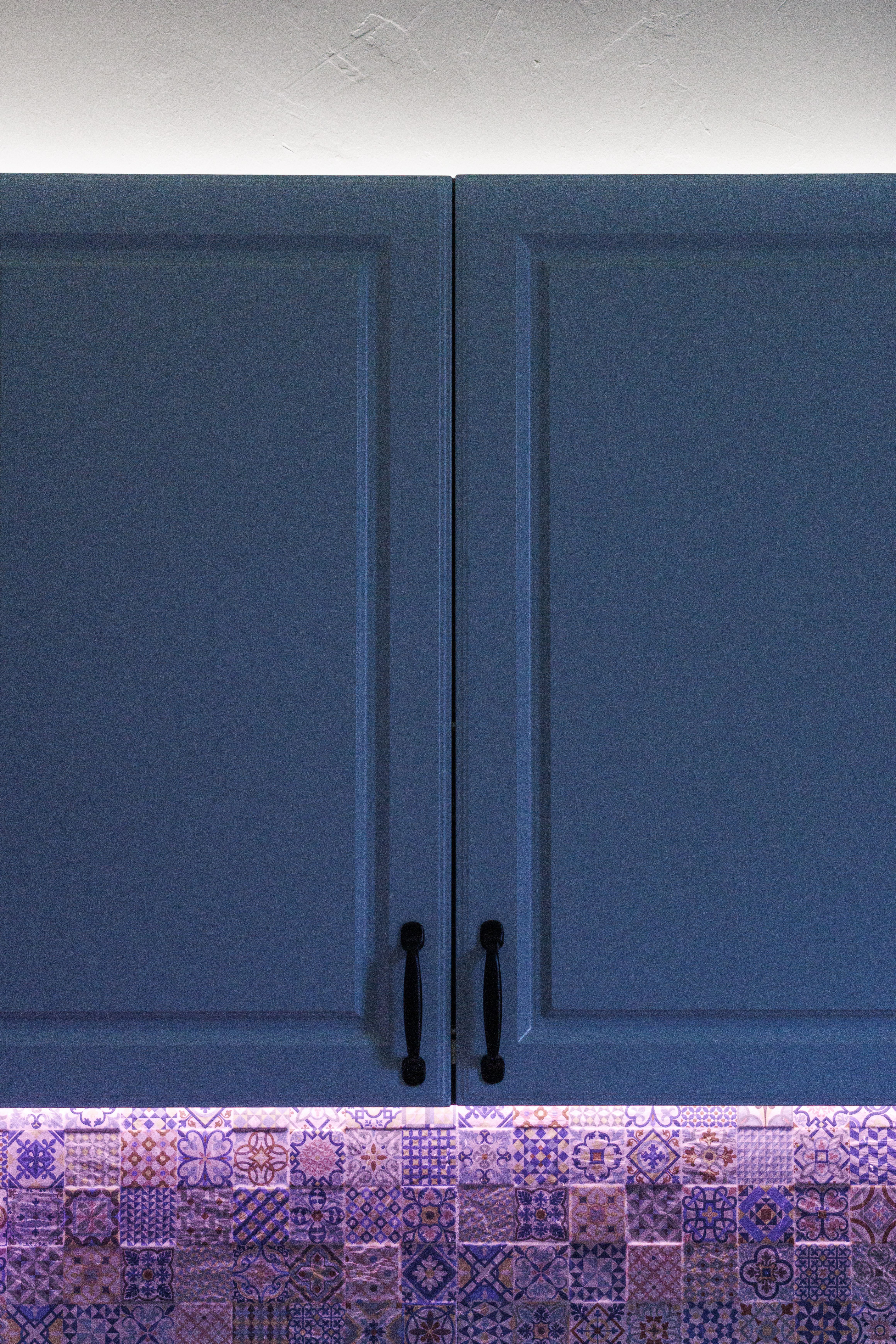
Reference photo: patterned splashback tiles meeting the underside of wall cabinets, the line where setting-out shows most.
T-01 · “CAN YOU REPLACE THE SPLASHBACK?”
Taking off old tiles often pulls plaster or paper facing with them. Sometimes the wall underneath is sound and only needs patching. Sometimes it’s soft, uneven or water-marked behind the sink and needs more preparation or replacement sheeting. Tiling over existing tiles can work in some kitchens but not others, depending on adhesion, the extra thickness against benchtops and power points, and how flat the old surface is.
T-02 · SUBSTRATE
#01 Moisture
Signs of past leaks behind the sink, near the dishwasher or along the bench line.
#02 Soundness
Whether the plaster, sheeting or old tile is firm enough to carry new adhesive and tile.
#03 Flatness
Dips, bows and out-of-plumb corners that show up as uneven grout lines or lippage.
#04 Service access
Power points, taps and outlets in the tiled area, and whether any of them need to move.
An inspection can’t reveal every concealed issue. What’s found once old tiles come off can change the preparation needed.
T-03 / T-04 · SETTING-OUT & SUITABLE MATERIALS
Setting-out decides where full tiles sit and where the cuts go. On a splashback that usually means centring on the cooktop or window, avoiding thin slivers at the cabinet ends, and planning neat cuts around power points. The bench line is rarely perfectly level, so the first course is set from a true line rather than simply following the benchtop.
Suitable materials depend on the surface and the tile: the adhesive type for the substrate, tile size and weight, a grout that’s practical to clean near the cooktop, and flexible sealant where tiles meet the benchtop rather than rigid grout. Once the checks and setting-out are done, the written quotation reflects the preparation your kitchen actually needs.
T-05 · KITCHEN FLOOR TILING
WHEN SERVICES MOVE
RELATED READING