
#12 · PLASTERBOARD INSTALLATION & PLASTERING
Plasterboard installation, patching and plastering as part of kitchen renovations in Brighton. When cabinets come off or services are relocated, the wall behind is rarely ready for new paint or tiles. Ivan Bodnar, an independent sole trader with approximately 15 years’ personal renovation experience, looks at the wall on site and includes the work it needs in a written quotation after assessment.
WHERE PLASTER COMES IN
Take out an old cabinet run and you usually find fixing holes, adhesive from a previous splashback, cut-outs where pipes or power once ran, and patches of paint that stop at the old cabinet line. Before anything new goes on, these walls need patching, re-sheeting or levelling.
WHAT GETS CHECKED
Condition and straightness of the framing, and where services run behind the lining.
PRACTICAL OPTIONS
New sheets fixed to sound framing. Any change to framing or structure goes to a qualified practitioner.
WHAT GETS CHECKED
Fixing holes from removed cabinets, old adhesive, and cut-outs left after relocated power points or pipes.
PRACTICAL OPTIONS
Patch, set and sand small areas. Replace a section of sheet where damage is extensive, depending on inspection.
WHAT GETS CHECKED
How the joints are finished, surface dust, and what previous coatings are on the wall.
PRACTICAL OPTIONS
Fill, sand and seal so the new paint dries evenly over patched and original areas.
WHAT GETS CHECKED
Flatness, moisture, and residue from a previous splashback.
PRACTICAL OPTIONS
Repair or replace the board so it suits the tile and adhesive chosen. Requirements vary with location.
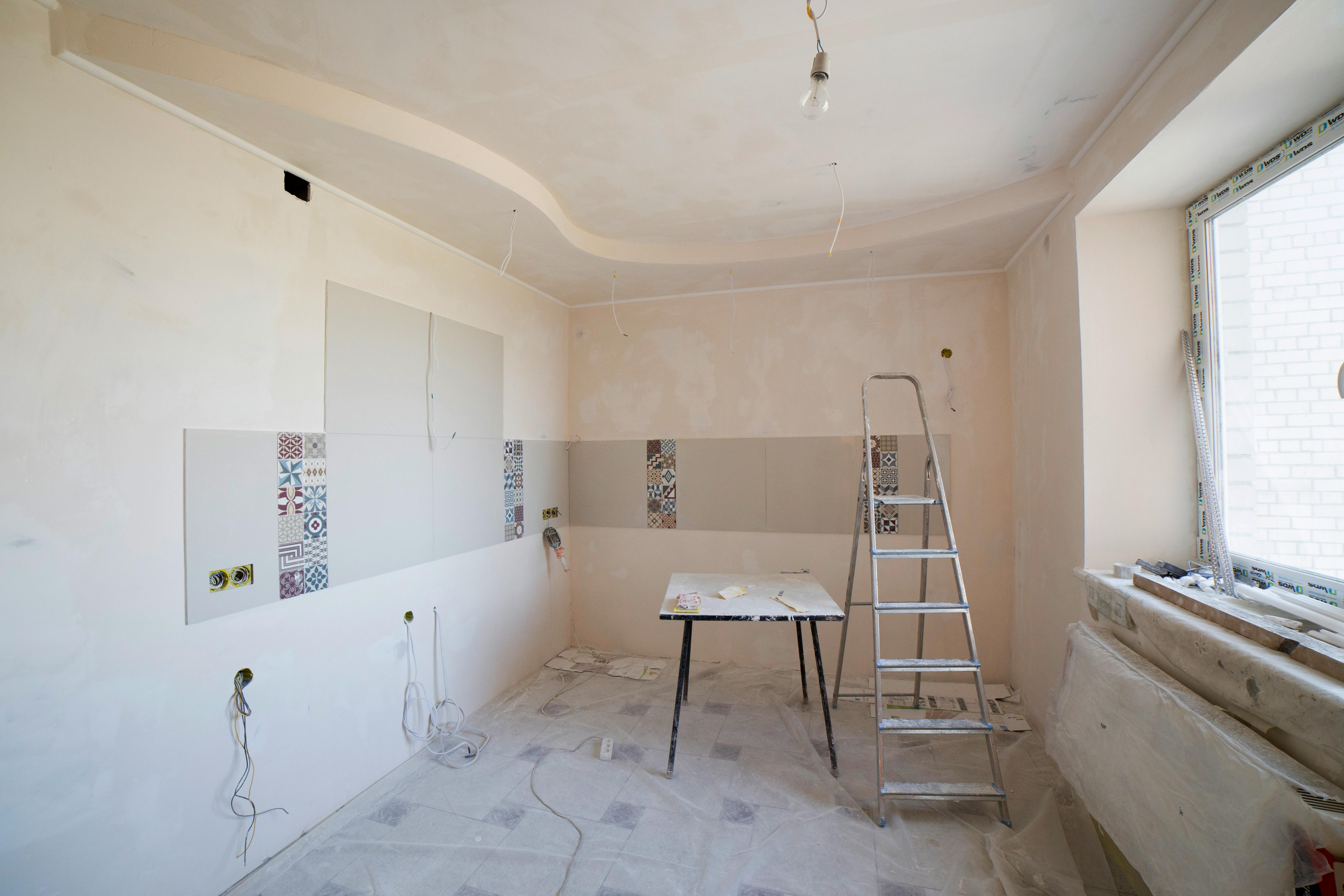
Reference photograph: a kitchen wall mid-renovation, before making good.
02 · PREPARATION FOR PAINT & TILES
New paint picks out every badly finished joint once the light hits it. A splashback laid over an uneven wall leaves lippage and gaps that grout can’t hide. If you replace the visible finish before checking moisture, substrate suitability, service access and underlying damage, you risk avoidable rework.
03 · STRUCTURAL & REGULATED WORK
Ivan Bodnar is an independent sole trader and does not claim unverified trade licences or builder registration. Plasterboard and plastering cover the lining and its finish. Anything structural needs an appropriately qualified practitioner.
Removing or altering walls — structural assessment comes first, from a qualified practitioner.
Structural engineering and architecture — outside Ivan’s scope.
Relocated power points and pipes — done by authorised electrical and plumbing specialists before the wall is closed and made good.
Suspect older linings — asbestos assessment and removal is specialist work and isn’t carried out by Ivan.
Permits and approvals — these vary from project to project and need checking for each job.
That depends on how much damage there is and how sound the board is. Small fixing holes and cut-outs can usually be patched. Water-damaged or crumbling sections are better replaced.
No inspection can reveal every concealed issue. Ivan explains what he can see, what is likely, and what can only be confirmed once the wall is opened.
05 · RELATED READING
SURFACE